Preamble
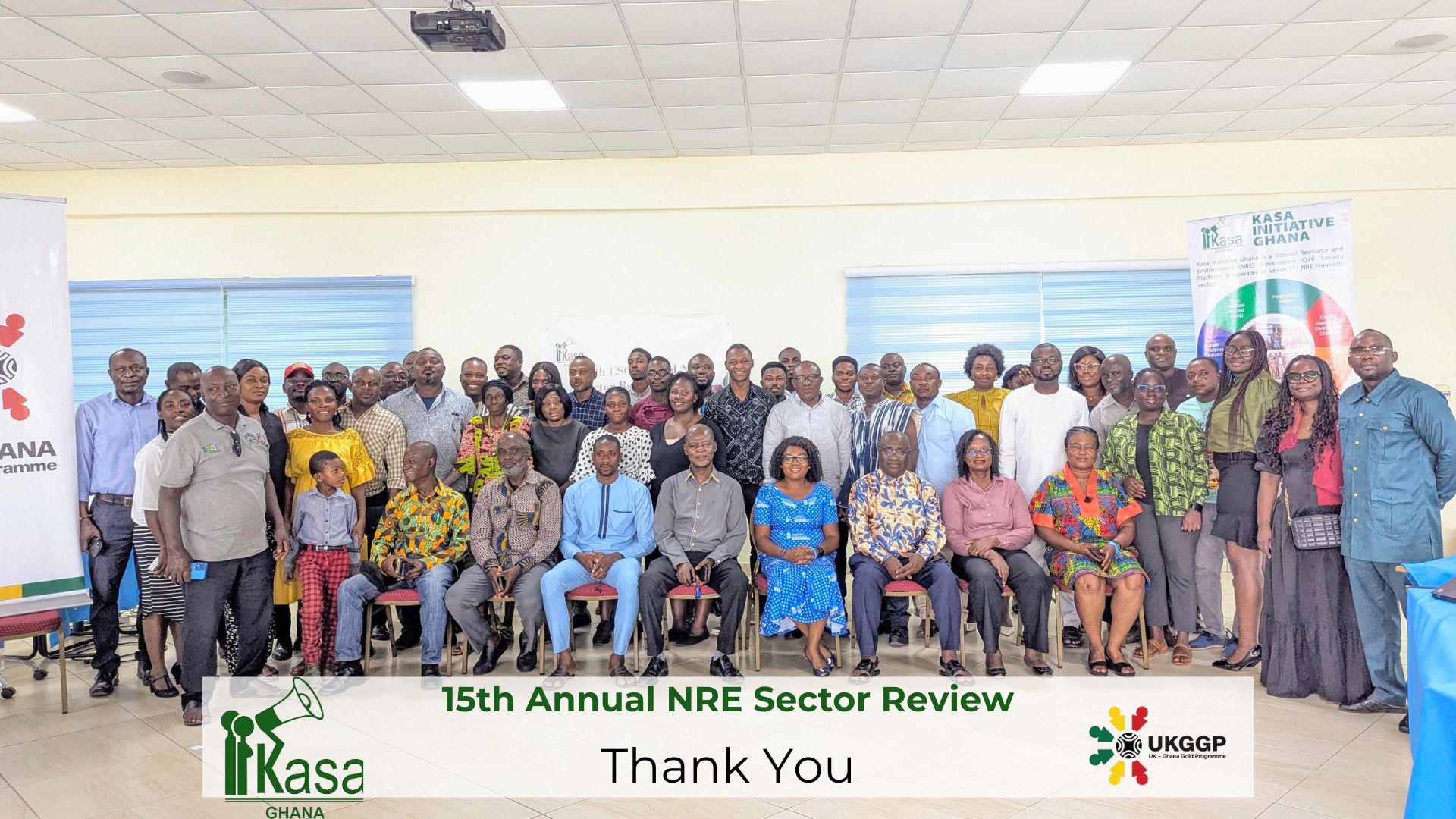
We, members of KASA, an umbrella body of 7 coalitions of natural resources related nongovernmental and Civil Society Organizations (CSOs), having met at our 15th Annual
Review/General Meeting (AGM) from 3rd to 4th December, 2024, at Erata Hotel, East legon, Accra. and having considered and discussed some crucial issues under the theme “Confronting the Scourge of Illegal Mining: Required Policy Change and the Role of Political Commitment.”
Agreed on the following:
- Illegal mining contaminates water bodies, depletes fisheries, deforests lands, and destroys
biodiversity. - Incoherent laws, lack of enforcement, and weak policies exacerbate the problem.
- Mining disrupts livelihoods, causes land dispossession, and compromises health due to
pollution. - Illegal mining activities provide a conduit for illicit financial flows and financing of serious
organized crime
Recognizing the devastating impacts of illegal mining on Ghana’s natural resources including, water bodies, fisheries, land, Forestry and Biodiversity, environment and sustainable development at large, and acknowledging the urgent need for policy reform and unwavering political commitment to address these challenges, we highlight the following recommendations and policy actions:
Forestry
- The government should complete the revocation process for LI 2462 and revoke all existing mining concessions in forest reserves.
- All forest reserves in Ghana should be no-go areas for all forms of mining in Ghana • There should be synergies and alignment between state agencies in terms of their policies, laws and strategies.
- The state should pursue a national forest restoration program on and off-reserve that hinges on a comprehensive assessment of all mining degraded areas in Ghana
- The government should implement an extractive sector approach that moves from surface mining to deep shaft/underground mining.
- The Minerals Commission should ensure transparent and accountable allocation of mining concessions for all forms of mining in Ghana.
- Ghana should implement a traceable gold value chain to ensure full recovery of revenues to the state and also address environmental impacts.
Fisheries
- We call for a comprehensive assessment of fisheries resources to provide data of the impact of illegal gold mining on fisheries and the level of contamination.
- We demand strict enforcement of no mining in water bodies and other fisheries habitats.
- We recommend water and land rehabilitation to remove contaminants from illegal mining, including heavy metals, etc., to reduce the impact on fisheries resources.
- We recommend installing a river monitoring system for water quality to assess pollution from mining and improve collaboration to achieve SDG 14 target 14.1: By 2025, prevent and significantly reduce marine pollution of all kinds, in particular from land-based activities, including marine debris and nutrient pollution.
Land
- Repeal the Minerals and Mining Act 2006 (Act 703) on surface mining to save the land and environment.
- Provide legal aid to community members whose land rights have been violated, including displaced farmers in mining communities.
- The Land Commission should put structures in place to bring awareness on documentation to the doorstep of the community people.
- The State should be circumspect in the exercise of its discretionary powers on compulsory acquisition of land and increase efforts to streamline the operations of Artisanal and Small Scale Mining
Water and Sanitation
- Develop a shadow report on the issue of water pollution in Ghana and its effects on health, livelihoods and share it with the UN Special Rapportuer on human rights and Environment.
- Fast-track the development/ establishment of the LI to turn the buffer zone policy into law and ensure its full implementation to improve the protection of water bodies.
- Increase funding to regulatory institutions including the Water Resources Commission, Environmental protection Agency, Minerals Commission, etc to improve the protection of water bodies from illegal mining activities.
- Strict Enforcement of Mining and Environmental Laws: Strengthen and enforce mining regulations to promote sustainable practices and curb illegal mining activities. Empower relevant agencies and law enforcement agencies to dismantle illegal operations, arrest and prosecute offenders, and confiscate equipment.
- Long-Term Environmental Protection and Reforestation: Implement a national reforestation plan to restore lands degraded by illegal mining, helping to restore the environment and create green jobs for affected communities. Protection of Water Treatment Facilities: Safeguard water treatment facilities from illegal mining encroachment and support GWCL in maintaining potable water supply, with additional funding for upgrading treatment capacity
Mining
- Repeal of the LI 2462 i.e. Mining in Forest Reserves
- Speed up the revision and implementation of the Minerals and Mining Act 703 to make it consistent with the current trend in the industry.
- Increase efforts to streamline the operations of Artisanal Small-scale Mining within the lifecycle of the mine (prospecting, licensing, reclamation, etc)
- Strict enforcement of the existing laws on illegal mining
- Speed the provision of site-specific geological data to Small Scale miners to curb the destruction of the environment and access to finance.
- Facilitate access to credit and appropriate technology to eliminate the incidence of informal arrangements between foreign nationals and Ghanaian miners which fuel gold smuggling and illicit financial flows.
- Convert the 1.5% Withholding tax on unprocessed minerals to mineral royalty to ensure a return of a portion of the revenue to deal with the development challenges imposed by mining and to help sustain the fight against galamsey.
Oil and Gas
- A regulated fuel supply regime to small scale mining must be introduced – through permit to address the prevailing uncontrolled and unregulated systems of supply. Therefore, the practice of petroleum product sales – in drums, jerry cans, and other large containers must be prohibited, unless the buyer produces a special permit from the relevant state agency – Minerals Commission
- An effective monitoring system including undercover surveillance, and deterrent sanctions must be in place to consolidate the above.
- Illegal mining operations must be banned and criminalized.
- The tax and revenue sharing regime governing small-scale mining must be reviewed to improve benefit to mining communities.
- Deliberate efforts must be made to leverage petroleum revenues to finance the Energy Transition in ways that ensures a mining sector that is less reliant on fossil energy.
Climate Change & Environment
- A robust legislation must be enacted and enforced to protect specific areas from destruction. If such laws exist, they must be effectively enforced, with offenders prosecuted per the law.
- Farmers and communities should be protected against the effects of Galamsey through innovative mechanisms including climate finance, and agricultural insurance.
- Enhanced and continued public education and awareness of the effects of Galamsey using new and current evidence available to us.
- We should implement Free Prior Informed Consent (FPIC) in community and stakeholders’ engagement processes.
- The use of context specific approaches to land restoration should be put in place with consideration to the local community needs and wellbeing.