Preamble
We, representatives of Civil Society Organisations (CSOs), media and ecosystem actors on the environment and gender sectors in Northern Ghana, having participated in a workshop organised by CARE International under the auspices of KASA Initiative on Monday and Tuesday, the 23rd and 24th of August 2022;
Excited about the GCF Grant to implement the Ghana Shea Landscape Emission Reductions Project; the establishment of a project management office in Tamale and the willingness of the Project Management Team to make information available that fosters transparency, accountability and gender inclusion.
Happy about the joint partnership framework between state and non-state actors, establishment of collaboration and coordination mechanisms as part the implementation of the Ghana Shea Landscape Emission Reductions Project Management
Enthused about the equal representation and employment of women and men in the project management team that reflects the gender diversity and social inclusion dimensions of the zone of influence;
Concerned about the delayed implementation of the project interventions which have the potential to impact on the outcomes
Disturbed about the risk of over centralization of the project management functions in Accra as evidenced in Sign Post of the project in Tamale bearing the address and contact details of officers in Accra even though the project management team is located in Tamale
Unsure of the commitment and readiness of the project team to implement a gender responsive Action Plan that strengthens participation of women, men and minorities;
Affirming that the growing deforestation and removal of tree spices renders in turn agricultural landscapes increasingly prone to desertification and land degradation which are exacerbated by the effects of climate change. Desertification, climate variability and food security are closely linked through drought, land cover changes, and climate and biological feedbacks.
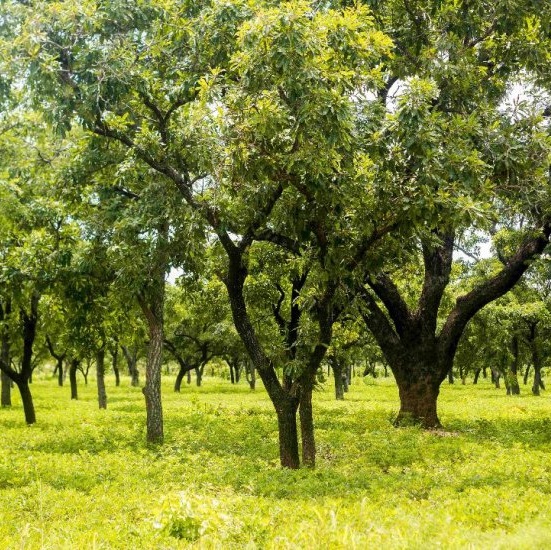
Recognising that Urgent Action need to be taken now to restore the landscape and shea trees which will in parallel improve social and environmental resilience and provide real economic benefits for inhabitants.
Concerned that the loss of forest cover results in a more abundant growth of grasses, which, in turn, result in more intense fires in the dry season, frequently causing further degradation and deforestation and preventing regeneration of forest areas already impacted by other drivers. It is estimated that; 1,058,492 hectares have been deforested resulting in emissions of 3,568,400 tCO2e per year
Encouraged by the commitment of the ‘Ghana Shea Landscape Emission Reductions Project’ management team in reaching-out to stakeholders, securing their buy-in to support efforts that enhance forest carbon stocks across the landscape by 1) restoring 200,000 hectares of off-reserve savannah forests/woodlands and place them under self-financing community management in Community Resource Management Areas (CREMA); 2) restoring 100,000 hectares of degraded shea parklands; 3) creating 25,500 hectares of modified taungya system/forest plantation in severely degraded forest reserves, and; 4) implementing an integrated monitoring system and completing the national REDD+ architecture for safeguards, forest monitoring and reporting systems. See Table 1 below for a summary of interventions and impacts.
Determined to advocate for and demand transparency, accountability and performance of the ‘Ghana Shea Landscape Emission Reductions in the Northern Savannah Ecological Zone;
Hereby Recommend as Follows:
- The Project Management Team Must commit to participatory monitoring and evaluation frameworks involving civil society, beneficiary communities, women and youth groups
- The Ghana Shea Landscape Emission Reductions Project Management Team Must ensure effective and efficient media engagement particularly in the project implementation zones so as to ensure effective communication and dissemination of information
- The project management team must put in place an effective and efficient communication strategy and plan. Project sites and office locations must be properly designated with published contact details of the project directed to officers in the zone of influence (Tamale)
- We recommend that the Ghana Shea Landscape Emission Reductions Project Management Team Must Ensure that planting of tree seedlings must not lead to felling of indigenous tree species.
- Civil Society Organisations (CSOs) including women’s groups and those working around climate change issues Must continue to play a crucial role in advocating for transparency, accountability and performance at every stage of the project interventions. The Coalition of CSOs in the Northern Sector under the auspices of the KASA Initiative Ghana commits to monitor, generated evidence and champion advocacy actions that ensures transparency, accountability and performance.
- The media should disseminate information and education on the Ghana Shea Landscape Emission Reductions Project’ and make efforts to translate information into the local Ghanaian languages.
Issued On: Tuesday 24th, 2022