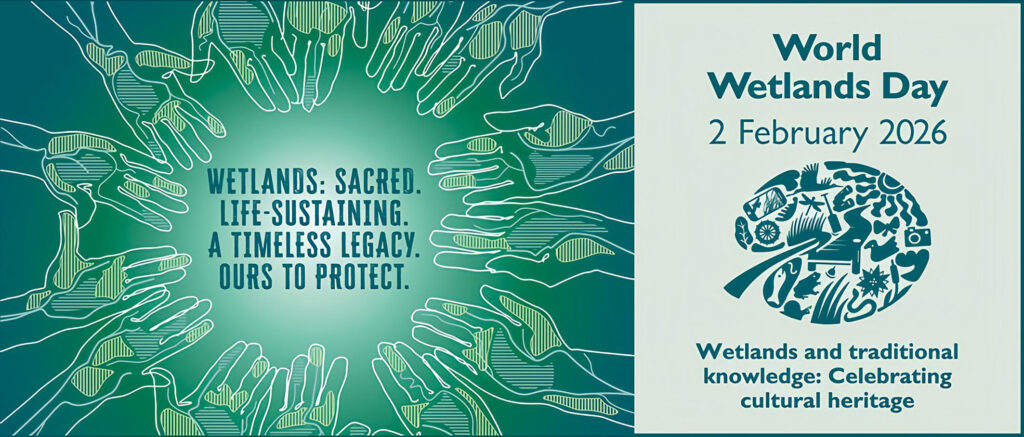
2026 Theme: Wetlands and Traditional Knowledge: Celebrating Cultural Heritage
The 2026 theme highlights the important role of traditional and indigenous knowledge in wetland management and the preservation of cultural identity. It seeks to promote dialogue and deepen understanding of the close connection between wetlands and long-standing cultural practices within communities.
World Wetlands Day is a global event dedicated to recognizing the significance of wetlands, which include a wide range of habitats such as lagoons, marshes, swamps, floodplains, and mangroves. These ecosystems play a crucial role in maintaining water quality, supporting biodiversity, mitigating the impacts of climate change, and sustaining the livelihoods of millions of people worldwide.
The day marks the adoption of the Convention on Wetlands (Ramsar Convention) on 2 February 1971 in the Iranian city of Ramsar, located on the shores of the Caspian Sea. Since 1997, the Ramsar Secretariat has provided guidance and materials to support countries in raising public awareness about the importance and value of wetlands.
Ghana is a Contracting Party to the Ramsar Convention, having acceded to the Convention on 22 February 1988, with it entering into force on 22 June 1988. As part of its obligations under the Convention, Ghana commemorates World Wetlands Day and promotes the conservation and wise use of wetlands of national and international importance.
Wetlands cover approximately 10 percent of Ghana’s land area, including designated Ramsar Sites such as the Keta Lagoon Complex, Densu Delta, Sakumo Lagoon, Songor Lagoon, Muni-Pomadze, and Owabi Lagoon. These wetlands play a vital role in improving water quality, regulating floods, supporting fisheries, conserving biodiversity, and sustaining cultural traditions linked to fishing, crafts, and seasonal practices.
Ghana is increasingly experiencing the impacts of water stress, pollution, floods, and droughts. In this regard, wetlands are critical for regulating water flow, reducing the severity of floods and droughts, filtering pollutants, and improving downstream water quality, thereby contributing to the health and well-being of communities.
Despite these benefits, wetlands in Ghana are under threat. An estimated 30–40 percent of wetland areas have been lost due to encroachment, pollution, unplanned development, and limited public awareness of their value. This degradation not only affects ecosystems but also undermines traditional knowledge systems and community stewardship practices.
Through advocacy, inclusive civic participation, and engagement with communities and institutions, KASA Initiative Ghana continues to support efforts aimed at protecting wetlands, promoting traditional knowledge, and strengthening sustainable and people-centered environmental governance.